When a passenger vehicle collides with a commercial trailer, the results are rarely minor. In the most devastating scenarios, the smaller car slides beneath the trailer’s frame, resulting in what legal and safety experts call an underride crash. Victims of Underride Truck Accidents in Texas often face a grueling recovery from life-altering injuries or the tragic loss of a loved one. Seeking justice in these cases requires a deep understanding of federal safety regulations and the complex liability laws unique to the Lone Star State.
What Are Underride Truck Accidents in Texas?
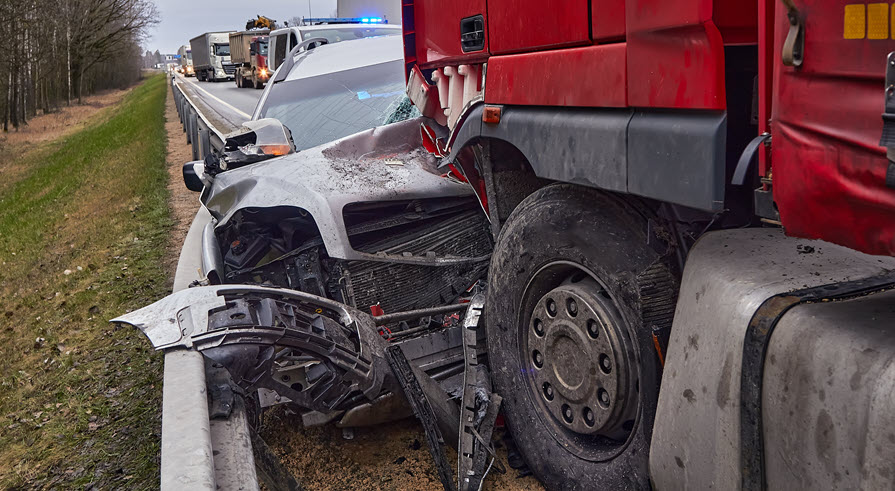
An underride accident occurs when the front end of a passenger car, SUV, or motorcycle travels under the body of a large commercial truck or trailer. Because the chassis of a semi-trailer is significantly higher than the hood of a standard car, the trailer’s edge can strike the vehicle at the windshield or roof level. This bypasses the car’s primary safety features—such as bumpers and crumple zones—often leading to “roof cabin intrusion” or decapitation.
Underride Truck Accidents in Texas are particularly prevalent due to the state’s massive volume of commercial traffic. With major freight corridors like I-10, I-35, and I-20, Texas consistently leads the nation in fatal truck accidents. In 2023 alone, Texas recorded over 770 fatal large truck crashes, more than any other state. When these collisions involve underride, the survival rate for occupants of the smaller vehicle drops significantly.
The Two Primary Types of Underride Crashes
Liability and cause often depend on the specific type of underride that occurred:
-
Rear Underride: This happens when a car strikes the back of a trailer. While often associated with tailgating, these are frequently caused by a truck’s missing or broken taillights, or a driver slamming on brakes without warning.
-
Side Underride: These occur when a car slides under the side of a trailer. This typically happens when a truck driver makes a wide U-turn, attempts to cross a highway, or changes lanes without seeing a vehicle in their blind spot.
Who Is Liable for Your Injuries?
Determining fault in Underride Truck Accidents in Texas is rarely a straightforward process. Unlike a typical car-on-car accident, a trucking claim often involves multiple defendants, each with their own legal team and insurance carrier.
The Truck Driver
The driver may be held liable if their negligence directly caused the collision. This includes distracted driving, operating while fatigued, or failing to properly signal a turn. In Texas, if a driver violates “Hours of Service” (HOS) rules, it serves as powerful evidence of negligence.
The Trucking Company
Under the legal doctrine of respondeat superior, trucking companies are often responsible for the actions of their drivers. However, they can also be held directly liable for:
-
Negligent Hiring: Failing to conduct proper background checks.
-
Inadequate Training: Sending inexperienced drivers onto complex Texas highways.
-
Maintenance Neglect: Failing to inspect and repair faulty underride guards or lighting systems.
Manufacturers and Maintenance Contractors
If a rear underride guard (the “DOT bumper”) fails or snaps upon impact, the manufacturer of that guard might be liable for a product defect. Similarly, if a third-party shop performed a “patch job” on a damaged guard instead of replacing it, that contractor could be brought into the lawsuit.
Comparison: Rear vs. Side Underride Safety Standards
| Feature | Rear Underride Guards | Side Underride Guards |
| Federal Requirement | Mandatory (FMVSS 223 & 224) | Not currently mandatory |
| Purpose | Prevents cars from sliding under the back | Prevents cars from sliding between the wheels |
| 2024 Standards | Must withstand 35 mph impact | No federal performance standard |
| Common Cause | Sudden stops, lack of lighting | U-turns, merging, lane changes |
The Role of Texas Laws and Federal Regulations
Navigating the aftermath of Underride Truck Accidents in Texas requires a firm grasp of both state and federal rules. Texas follows a modified comparative negligence system (the “51% bar”). This means you can still recover compensation even if you were partially at fault for the crash, provided your responsibility does not exceed 50%.
Federal Motor Vehicle Safety Standards (FMVSS)
The National Highway Traffic Safety Administration (NHTSA) recently upgraded the requirements for rear underride guards. As of mid-2024, all new trailers must be equipped with guards that can withstand a rear-impact crash at 35 mph. If you were involved in an accident where an older, rusted, or non-compliant guard failed, you may have a strong case for gross negligence against the carrier.
The Problem with Side Underride Guards
While rear guards have been required since 1953, side underride guards remain a point of intense legal debate. Despite research showing they could save hundreds of lives annually, they are not yet federally mandated. However, in Texas courts, lawyers often argue that because this safety technology is widely available and affordable, a trucking company’s failure to install it constitutes a “breach of the duty of care.”
Catastrophic Injuries and Potential Compensation
The physical toll of Underride Truck Accidents in Texas is almost always catastrophic. Common injuries seen in these cases include:
-
Traumatic Brain Injuries (TBI): Caused by the roof of the car collapsing onto passengers.
-
Spinal Cord Injuries: Leading to partial or full paralysis.
-
Internal Organ Damage: From the crushing force of the trailer’s steel frame.
Recovering Damages
In a successful claim, victims can seek both economic and non-economic damages. Economic damages cover tangible losses like hospital bills, surgery costs, and lost wages. Non-economic damages address the “human” cost, such as pain and suffering, mental anguish, and loss of companionship. In cases of extreme recklessness—such as a driver operating under the influence—Texas law may also allow for punitive damages to punish the offender.
Real-World Context: Texas Construction Zones
In 2025, several high-profile accidents in Terrell and Austin highlighted the dangers of trucks barreling through construction zones. When a tractor-trailer fails to slow down in a work zone and rear-ends a line of cars, the risk of multiple underride fatalities is extremely high. These incidents often reveal a pattern of safety violations, such as falsified logbooks or fraudulent vehicle registrations, which can significantly increase the value of a victim’s claim.
Pros and Cons of Pursuing a Lawsuit in Texas
Pros
-
High Insurance Minimums: Commercial trucks carry much larger policies (often millions) compared to private drivers.
-
Expert Testimony: Texas has a robust network of accident reconstruction experts specializing in underride dynamics.
-
Accountability: Lawsuits force companies to fix safety lapses, potentially saving future lives.
Cons
-
Statute of Limitations: You generally have only two years from the date of the accident to file a lawsuit in Texas.
-
Aggressive Defense: Trucking companies often send “rapid response” teams to the scene within hours to gather evidence that favors them.
-
Complexity: Proving that a guard was “defective” rather than just “hit too hard” requires intensive engineering analysis.
Conclusion: Fighting for Your Future
Survivors of Underride Truck Accidents in Texas face a long and difficult road. Between mounting medical debt and the physical trauma of the crash, the legal process can feel overwhelming. However, holding negligent trucking companies accountable is the only way to ensure you receive the resources needed for long-term care.
If you or a loved one has been impacted by an underride collision, time is your greatest enemy. Evidence like “black box” data and driver logs can disappear quickly. By acting decisively and understanding your rights under Texas law, you can seek the justice and compensation necessary to rebuild your life.